
Короткий зміст
Можливості для справжнього handmade у 2025 році є, але не на рівні “роблю щось миле своїми руками”, а на рівні високої майстерності, вузької конкуренції і товарів, які покупець не хоче замінювати дешевшим масовим аналогом.
Суть цієї статті: дорогий хендмейд продається там, де майстер піднімається вище рівня любителя і створює річ, яку можуть зробити дуже небагато людей. Саме в цій зоні з’являється реальний бізнес, бренд і високий чек.
Суть в одному блоці
Головна думка: для справжнього handmade можливості є не “всюди потроху”, а там, де ваша майстерність переходить у рідкісну компетенцію і товар перестає бути схожим на те, що можуть зробити мільйони новачків або любителів.
Для кого ця стаття
- для handmade-майстрів, які хочуть зрозуміти, де ще реально є місце для дорогого хендмейду;
- для тих, хто не хоче йти в масове виробництво, Китай або print-on-demand;
- для майстрів, які сумніваються, чи можна продавати дорогі речі ручної роботи стабільно;
- для тих, хто хоче чесно оцінити, на якому рівні майстерності він зараз і куди рухатися далі.
Рівень майстерності і можливості для handmade-продажів
| Рівень | Що це означає | Який комерційний потенціал |
|---|---|---|
| Новачок | Мінімальний досвід, базові спроби, початкове хобі | Можна щось продати, але важко будувати стабільний бізнес |
| Любитель | Справжнє захоплення, багато часу на практику, але без рідкісної майстерності | Є шанс на окремі продажі, але конкуренція дуже висока |
| Початківець-майстер | Вже з’являється якість і впізнаваність техніки | Можна починати шукати сильніші ніші |
| Майстер | Високий рівень техніки, складні роботи, рідша компетенція | З’являється простір для дорогого handmade |
| Експерт | Дуже низька конкуренція і річ, яку можуть створити небагато людей | Саме тут виникає сильний бренд, високий чек і стабільний попит |
So, let’s imagine a mountain. This mountain — it’s in any type of craft. Handicraft or skills, artist, art, whether it’s knitting or jewelry making — it doesn’t matter, in any type of craft there is such a mountain. The foot of this mountain is all the people who have absolutely no experience. Maybe they once tried knitting, embroidery, or drawing there. Or, well, generally, these are people who are mostly interested in this type of craft, love to buy it, maybe… yes, have some small personal hobby.
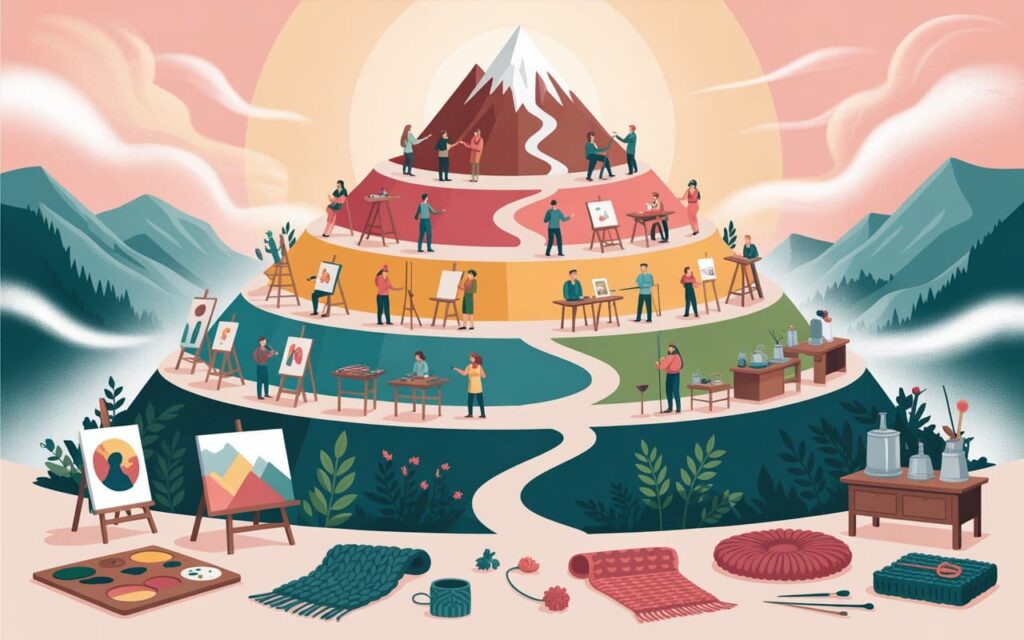
Okay. That is the entire foundation, the vast majority of people, their largest group. The beginning, this big start — these are beginners. These are people who have little experience, I don’t know, up to 200 hours of preparation or training, for example. It varies, of course, since each craft requires its own amount of preparation. Generally, these are beginners, people who, in childhood, may have been taught how to sew, knit, embroider by their grandmother. Such people, who are not masters or experts in their craft, are very, very numerous. This is the beginner.
Next is the next level — we climb up the mountain. The next level is an amateur. An amateur is someone with a real hobby. Someone who truly loves knitting, sewing, painting, who spends hours, a lot of time training and preparing. Most likely, this person hasn’t had formal training or attended an art school. Or, like me: you could probably say I’m an amateur because I can spend hours drawing, painting. So, okay, there are people who take online classes, who are learning for some reason, who have the desire and interest — this is their hobby. Okay — these are amateurs.
And further up, we go: beginner-master and expert, at the very top of this mountain. Up there, in the realm of handicraft arts, are the master craftsmen and experts. There are also other types of craftsmanship that are just starting out, yes, like these beginners and amateurs, and they are also very, very few. For example, blacksmithing: to become a real blacksmith or, say, a jeweler, it’s very hard to start from zero without equipment or education. Even having it as a hobby, do you understand? So, there are such crafts, and we will talk about them.
But why am I telling you about this mountain? Because only at the very top, where you become an expert, a master of high class, only there — in that field, where there is formal education and very low competition.
Ask yourself the main question: how many more people in the world know how to do what you can do? I know this is very hard. It’s, you know, when someone is already involved, has displayed 100 paintings on Etsy. It’s very difficult to objectively assess and honestly tell yourself that there are millions like me. They create roughly similar, comparable things.
Here, I’ll give you an example. My painting. My dacha. I am very proud of this painting. It holds a certain, unspoken value for me. When I die — I want this painting to hang on my wall. Because this is my dacha, my childhood. I managed to choose the right colors — yellow and blue. And here is my gate. I’m walking back from a walk with friends in the evening, going home, and I know my family is waiting for me at home, my grandmother is there, they’re playing cards, drinking tea. This painting is very precious to me. But for other people, this painting might not have the same value. Do you understand? When someone creates something, they think that if they put their soul into it, others will definitely value it. But unfortunately, that’s not always the case.
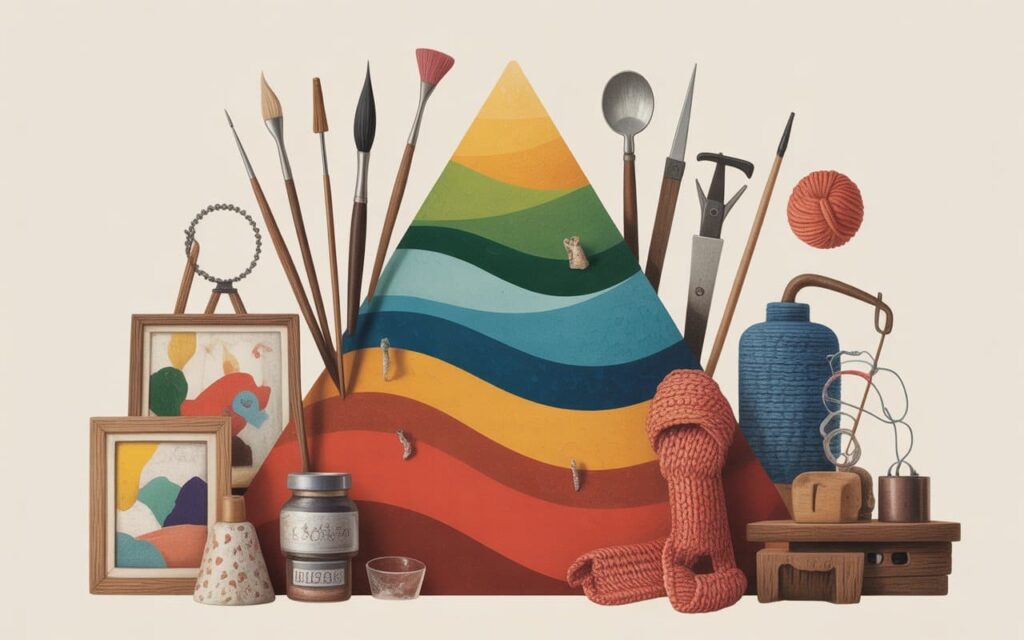
I realize that a painting like this — a painting of this level — could be created by millions of people. It’s enough to take a few online classes, enough to have some even simple, basic artistic training. It is painted with acrylic, which is actually much easier to work with than oil paints.
The market value of such a painting — I don’t know, maybe $20-50. Okay, maybe a hundred at most. Can you sell such a painting? Yes, you can. You can sell practically anything. On a marketplace, on eBay, on OLX — wherever you want. You can sell. But this is not a business, not a brand, not earning money on a regular basis.
Now let’s again consider this example. Can I paint a portrait, say? Well, I can. But can I realistically create a portrait that looks like hyperrealism? Very few people can do that. Very few.
If you think that competition in this field is huge, that “I can’t sell a painting” — no, it’s not huge. A person who buys expensive materials in another field, strings them together and creates a necklace, and this necklace has no special style, no real flair — just expensive materials strung on a string: here is my necklace, here is the pendant to it. That’s a hobbyist, you see? That’s a beginner.
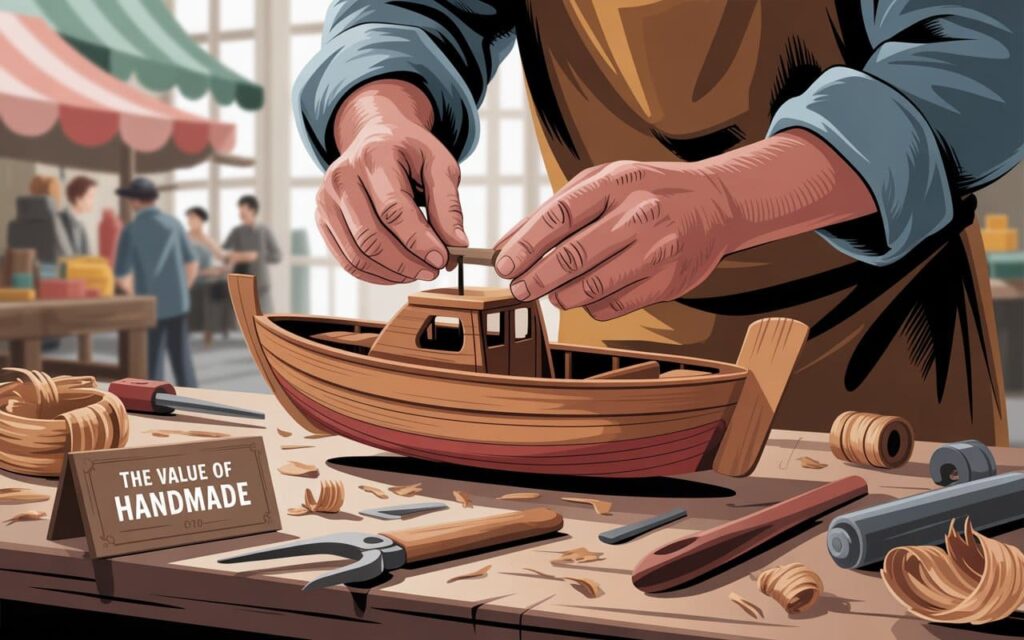
And if you can truly forge a ring yourself, make it with your own hands from metal, then yes, you can try to make it from gold, silver, copper, damascus steel. There are certain niches in this field. Not many people can do this. And the same applies to everything — to any craft. This applies not only to jewelry, not only to paintings, but to practically any type of craft. So if you are honestly and openly at the beginner or amateur level, it’s best to do two things. Either sell instructions — also for such beginners and amateurs. Don’t knit this hat for two days, spend a lot of effort, then barely recoup your materials. If you have some cool design — just sell a template, instructions. That’s already a business.
Or, if you have a cool, interesting idea — consider the possibility of print-on-demand. Or create a small production: have a machine that will do cool personalization. Find products on AliExpress, and personalize them. That’s a business. Or sell craft materials. Or sets for that audience that is at the bottom of this mountain.
Or, again, if you came up with a cool idea, you have a unique feature, your brand, your target audience — say, gothic or “Barbie”. There are many styles, many target audiences. I constantly give you ideas of new trends so that this lightbulb turns on. If you come up with something like that, then the next thing you need to think about (besides everything else): how to produce so that the item is small, lightweight for shipping, so that its price doesn’t exceed $20-50. So that I can still earn 100% from it, considering shipping and return costs. That is, understanding the cost of production: if I sell for 50, it should cost 25.
If my production takes a lot of time — can I hire someone who can do it faster? If the idea is great — maybe some kind of machine. Choose a niche, follow trends, and then everything I write about in these articles and show in live streams will be applicable to you, and you will be able to start your business.
But I know there are categories of people who are truly masters, experts in their craft: both artists, knitters, and jewelers. And in the next series of articles, as a continuation, I will show the niches with low competition. Why? Because very few people are at this high level of production. I will show you that there is demand for these products, and you can sell them at a higher price. These are things that will not face Chinese competition. Handmade work and high-quality materials are valued there. They will sell at a high price: say, over $200, and in paintings — even over $800.
Чек-лист: чи має ваш handmade шанс продаватися дорого
- Товар цінний не тільки для вас, а й для стороннього покупця.
- Його не можуть легко повторити тисячі людей після кількох онлайн-уроків.
- Ви працюєте не на рівні “симпатичної речі”, а на рівні майстерності, що помітна одразу.
- У товару є чітка причина коштувати дорожче: техніка, складність, матеріал, рідкість або стиль.
- Ви можете будувати навколо цього не разовий продаж, а бренд.
- Конкуренція у вашому сегменті реально нижча, ніж у масових handmade-категоріях.
Що робити, якщо ви поки не на вершині “гори”
- Чесно визначити, на якому рівні ви зараз: новачок, любитель чи майстер.
- Не вимагати від ринку високого чека за роботу, яку ще можуть легко повторити інші.
- Обрати ремесло або піднішу, де можна вирости в рідкісну компетенцію.
- Розвивати не лише “смак”, а реальну майстерність, яку видно покупцю без пояснень.
Часті питання
Чому не кожен handmade може стати бізнесом?
Чому не кожен handmade може стати бізнесом?
Бо “продати можна все”, але це ще не означає побудувати бренд і стабільний заробіток. Якщо річ можуть зробити мільйони людей на рівні любителя, конкуренція занадто велика для дорогого сегмента.
Що важливіше для дорогого handmade: душа чи майстерність?
Що важливіше для дорогого handmade: душа чи майстерність?
Емоція важлива, але сторінка дуже чітко пояснює: те, що має глибоку особисту цінність для автора, не обов’язково має таку саму ринкову цінність для покупця. Для високого чека потрібна ще й майстерність, яку об’єктивно видно.
Чому на вершині “гори” конкуренція нижча?
Чому на вершині “гори” конкуренція нижча?
Бо дуже небагато людей здатні робити справді складні, майстерні речі. Саме тому на рівні майстра й експерта відкриваються найкращі можливості для дорогого handmade.
Що робити, якщо я поки на рівні любителя?
Що робити, якщо я поки на рівні любителя?
Чесно визнати це і не будувати очікування високого чека там, де майстерність ще не стала рідкісною. Далі — або рости в техніці, або звужуватися до підніші, де ваш рівень уже може бути сильнішим.
Як зрозуміти, що я вже ближче до дорогого сегмента?
Як зрозуміти, що я вже ближче до дорогого сегмента?
Коли ваша річ виглядає так, що її можуть зробити дуже небагато людей, а покупець бачить у ній не просто “приємний handmade”, а високу майстерність і унікальну компетенцію.
Експертна позиція
Для справжнього handmade найбільші можливості з’являються не там, де “легше ввійти”, а там, де ваша робота переходить у зону рідкісної майстерності і перестає конкурувати з мільйонами схожих любительських виробів.
