
Brief Summary
Dropshipping on Shopify is an online sales model without a warehouse, where the store takes orders, and the supplier ships the product directly to the customer.
This article explains how to start dropshipping on Shopify: choosing a niche, finding a supplier, setting up the store, payments, shipping, SEO, and useful apps without common mistakes at the start.
Who is this article for
- For those who want to start drop shipping without their own warehouse.
- For beginners launching their first Shopify store.
- For sellers looking for a working niche, supplier, and the right starting model.
The essence of the article
Main idea: dropshipping on Shopify can be a good start-up model without inventory, but profit depends on choosing the right niche, reliable supplier, properly configured payments and shipping, as well as avoiding strategic mistakes.
Sounds tempting, doesn’t it? But, as in any magic, there are some pitfalls.
Pros:
- You can start with almost empty pockets. No warehouse – no expenses for it!
- Assortment? Why not the whole world in your shop!
Cons:
- The margin is sometimes so thin that you want to cry.
- Quality control? What’s that? You haven’t seen the product in person.
- The competition is fierce – you have to work with elbows.
- And if a customer wants to return a product… That’s when the real quest begins!
But have entrepreneurs ever been afraid of difficulties? Dropshipping is a challenge, an opportunity, the future of trade. Are you ready to become sales magicians? The decision is yours!
What is needed to start dropshipping on Shopify
| Stage | What needs to be done | Practical benefit |
|---|---|---|
| Creating a store | Select a name, theme, and basic structure for the Shopify store | Forms the foundation of the brand and trust |
| Payment and delivery | Set up payment methods and delivery logic | The customer can complete the purchase without hassle |
| Choosing a niche | Research demand, competition, and profitability | Less risk of entering a weak segment |
| Suppliers | Connect verified services and do not change them chaotically | More consistent product quality and delivery |
| SEO and pages | Optimize descriptions, contacts, delivery, returns, and SEO | Higher trust and better store visibility |
| Tools | Use DSers, Spocket, Printful, CJdropshipping, and other solutions | Faster launch and automation of processes |
Here is your Beginner’s Guide:
First of all – the account. Choose your store name wisely. It should be catchy and memorable. Like the title of a good e-commerce book.
Payments and Delivery – key points. Set them up as if your business’s life depends on it. Because it does. Price does not scare away – surprisingly, what frightens customers is the inability to pay.
Store Design – your business card. Do not skimp on it. Remember what Oscar Wilde said? “You will never get a second chance to make a first impression.”
Apps for dropshipping are essential – no online store works without them. Oberlo, DSers – choose whatever is more convenient. The Shopify app store is updated daily.
Products – the soul of the store. Import wisely. Each category is a separate story. Tell it to the whole world properly.
Contact pages, information about shipping and returns – this is your deal with the customer. Be honest and transparent. Every online store copies the contract from another.
SEO optimization. Sounds complicated? In reality, it’s just the art of being noticed in an ocean of information. Shopify has many SEO apps, every online business will find something to their liking.
And finally, launch. It’s like the premiere of a performance. Exciting, isn’t it?
Remember, in business, as in life – the devil is in the details. Pay attention to every step. And success will not keep you waiting.
What is needed to start a dropshipping business
Start with market research. Dive into marketplaces. What are people buying? Why? Answers to these questions are your path to success.
Google Trends, SEMrush are designed for entrepreneurs. They are like a compass in a sea of data. Use them. You won’t regret it.
Social media – a mirror of society. Study them. Trends are born right in social networks. Catch them – and you’ll be on the horse.
Competitors – your inadvertent teachers. Analyze them. Look for gaps in their strategies. That’s your niche.
Profitability and low competition – a golden combination. Find it. This is your key to profit.
How to choose a niche for dropshipping?
Clothing, home goods, electronics, cosmetics – eternal niches, as they say – evergreen. But don’t limit yourself to them. Sometimes treasure is hidden in unexpected places.
Demand, competition, profitability – the holy trio of business. But don’t forget about your interests. Business should bring not only money, but also satisfaction.
Remember, choosing a niche is not just a decision. It’s a strategy. Approach it wisely. And success will not keep you waiting.
What not to do
No matter what they tell you, you shouldn’t engage in arbitrage with eBay and Amazon on Shopify. Amazon will ban you, and Shopify will close your store forever.
There’s no need to search for products on Google – every dropshipping guide states that finding suppliers should be done on specialized platforms.
Do not sell a product first and then look for a supplier afterward. In the era of Amazon, a buyer will cancel their purchase after a couple of days if there is no tracking.
It’s not advisable to change suppliers while sales are ongoing just because you’ve found cheaper products elsewhere. Products differ not only in price but also in quality and delivery speed. You need to verify.
Tools for dropshipping on Shopify
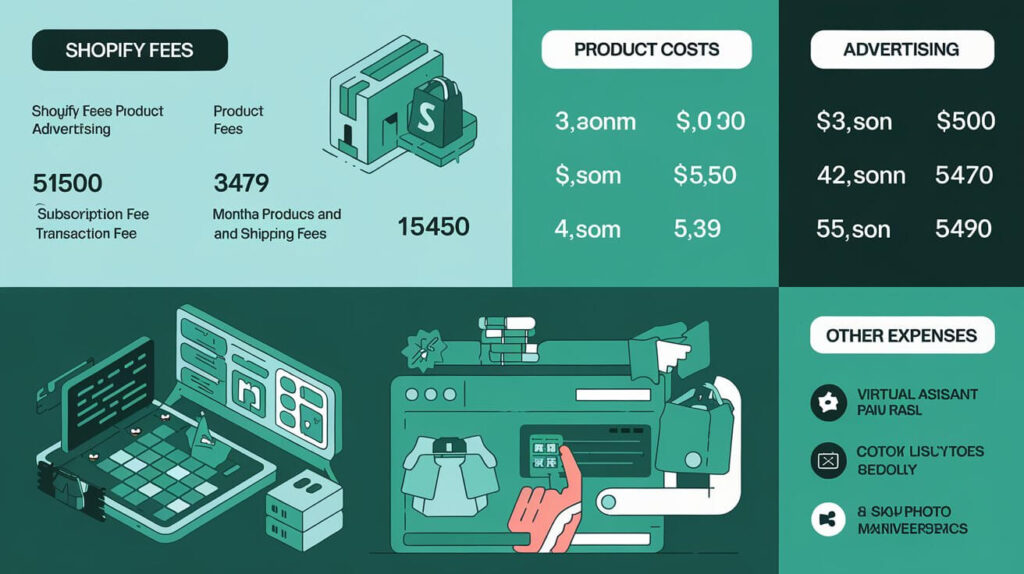
Apps and services integrated with Shopify for dropshipping
DSers – is a favorite for working with AliExpress. Simple, efficient, without unnecessary fuss.
Spocket – a discovery for those looking for suppliers in the USA and Europe. The quality of products is top-notch.
Printful, print on demand – is the future. No warehouses, minimal risks.
CJDropshipping – the assortment is impressive. But be cautious, it’s easy to get lost in the choice.
Modalyst for branded products. Expensive? Maybe. But the quality is worth it.
Dropified automates processes. The time savings are huge.
Zendrop – fast delivery from the USA and China. In today’s world, speed is the key to success.
Printify – another option for print on demand. Compare with Printful, choose what you like.
Ali Orders automates orders from AliExpress. Convenient, but there are nuances.
AutoDS – comprehensive management. Good for those who like to keep everything under control.
What tools help automate an online store?
Now about automation.
Oberlo/DSers – excellent assistants for online stores in importing products and processing orders.
Zapier. A genius tool. Connects apps and saves a lot of time.
Inventory Source syncs stocks and prices. Forget about manual spreadsheet updates, as your dropshipping business model requires scaling.
Dropified, AutoDS, Ali Orders – each good in its own way. You can now dropship from anywhere in the world. Experiment, find your ideal.
Spocket, Modalyst, CJDropshipping, Zendrop – automate different aspects. Choose according to your needs.
Remember, tools are just assistants. The main thing is your strategy and market understanding. Without this, even the best tools are useless.
Strategies for successful dropshipping
How to attract customers to a dropshipping store
Social networks? Yes, they are important. But don’t just post and forget. Engage, for goodness’ sake! People love real dialogue.
Targeted advertising is a powerful tool. But don’t spend money recklessly. Aim precisely, like a sniper.
SEO. Sounds boring, but it’s your ticket to the top. Optimize your website, and clients will come on their own.
Content is king, and period. Write so that readers forget about lunch. Share real stories, not dry facts.
Influencers? Yes, but choose wisely. Don’t chase after millions of followers. Better find someone who speaks your clients’ language.
Email marketing. Old school? Not at all! Personalize your emails as if you’re writing to an old friend.
Oh, and one more thing. Don’t believe everything you read about marketing. Even me. Test, analyze, draw conclusions. Your store’s experience is the best teacher.
What marketing tactics are suitable for dropshipping?
Content marketing is your faithful ally. Create articles, videos, infographics. But don’t just create – put your soul into it. Your content should grab attention and make people think.
Retargeting is a clever thing. Pursue the customer, but delicately. No buyer likes persistence.
Personalization is the key to a customer’s heart. Know your buyer better than they know themselves. Adapt your offers to their interests.
Promotions and special offers? Yes, they work. But don’t turn your store into an endless sale. Create value, not just lower the price.
Affiliate marketing is a powerful tool. Choose your partners wisely. Your values should align.
Conversion optimization is about fine-tuning a costly (very costly) tool. Every detail matters. The website should be user-friendly, the ordering process simple.
Remember, there are no universal solutions in marketing. What works in some cases may fail in others. Experiment, analyze, adapt.
And most importantly – be honest with your customers. Trust is earned over years and lost in an instant.
How to retain customers in e-commerce?
Listen, retaining a client in dropshipping is like holding a fish in your hands. Slippery business, but possible.
Quality of service? Yes, damn right! Respond to customers as if your grandmother is calling. Patiently and with soul.
A loyalty program is needed, but not the one everyone has. Come up with something unique. Let customers be amazed.
Email newsletters? Okay, but don’t be boring. Write so that people want to read. With humor, with a touch of flair. First, read newsletters from well-known stores.
The brand community is not just a Facebook group. It’s family. People love to be part of something bigger. Give them that opportunity.
Feedback is gold. But don’t just collect it, actually use it. Customer told you — you did it.
Product info? More transparent than water. No murkiness, no “as if”. Not much work, since the supplier provided all the content.
And surprise, damn it! A small gift can do more than a big discount.
Oh, and remember: in dropshipping, you’re not just selling a product. You’re selling an experience. Make it so good that the customer cries tears of joy at night.
Legal and financial aspects of dropshipping
How to manage taxes and accounting?
Alright, let’s talk about the boring stuff – taxes and accounting in dropshipping. But, damn it, it’s important!
First of all – become a sole proprietor. Without it, you’re not a player, just someone going out for a walk.
Simplified taxation – your ticket to paradise. Choose either the second or third group. But think with your head, not… well, you get it.
Income ledger. Sounds like a sleeping pill, but keep it like a first love diary. Every digit is worth its weight in gold.
Single tax and unified social tax (UST). Pay it, or else. The state doesn’t like tears, only money.
Quarterly declarations. Yes, a real bore. But if you slip up – hello, inspection!
And remember, damn it – only the commission counts as income! Not the entire amount of the goods. Otherwise, the tax authorities will eat you up and won’t even choke.
You know, the law is strict, but it’s the law. Play by the rules, and you can sleep peacefully. Well, almost peacefully – it still is your business.
And yes, responsibility. Boring, of course. But you can’t do without it. It’s like putting on pants before going outside. Necessary, period.
What are the requirements for a dropshipping business on Shopify in Ukraine?
Let’s start with sole proprietorship. Register, choose taxes. Just like trying on shoes – if they pinch or not? Only here does your business stand at stake.
Contracts with suppliers. Read them like a detective – every line. Commission or agency – it doesn’t matter, the main thing is that you don’t get taken for a ride.
The law on consumer rights protection. Memorize it like poems in school. It’ll come in handy when the client starts asserting their rights.
Confidentiality, website rules – yes, they are necessary. But without them, you’ll be condemned faster than you can say “pizza”.
Shopify rules? Pure boredom. But if you break them – goodbye, business.
Oh, I almost forgot – permits for goods. Without them, you’re not a seller, just out for a walk.
It’s better to be friends with the law than to fight it. You’ll stay safer.
And yes, lawyers. Expensive? Of course. But cheaper than dealing with problems later.
In short, without legal backing, your business is like pants without a belt. It might just fall off at the most inopportune moment.
Shopify dropshipping: How to manage returns and customer service?
Alright, let’s talk about returns and customers in Ukraine. A really important topic, I must say. Shopify provides a template for retail online stores on the platform – take it, use it.
Return policy? Write it in a way that even a fifth grader can understand. No legal mumbo jumbo. In e-commerce, only buyers are clever.
Feedback – be like an annoying mother-in-law. Everywhere and all the time. Phone, email, even carrier pigeon if needed.
With suppliers regarding returns – it’s like dancing. Step on your partner’s toe and you’ll be left without a dance partner. Agree clearly.
Compensations? Yes, it costs a penny. But reputation is more expensive. Spend generously, don’t stint.
Customer inquiry software – your electronic secretary. Don’t skimp, get a smart one.
Staff training – invest as you would in your own children. Let them communicate with clients as if their fate of the universe depends on it.
Return analysis – like an autopsy. Unpleasant, but necessary. Dig into the causes, find the root of the problem.
And remember: there are no small things in customer service. Every sneeze of a client is a chance to make them your fan or your enemy.
Success stories and business cases from dropshipping
The most famous examples of successful dropshipping stores on Shopify
Let’s talk about successful guys in dropshipping on Shopify. These stories are just fire. The experience of leaders is useful for any business. After all, you can also sneak a peek at the promotion strategy of your online store, can’t you?
Tattly, for example. Who would have thought that temporary tattoos could make 10 million? And here you go!
And Pipsnacks? The guys showed up on Shark Tank with popcorn. Popcorn, damn it! And what do you think? The sharks bit!
Allbirds is something else entirely. They sell sneakers made from sheep’s wool and rake in $10-25 million a year. The sheep are probably in shock.
Kylie Cosmetics… Well, of course, the name played a role here. But $100 million in profit? That’s no small feat.
Warmly Decor and Notebook Therapy might not make as much noise, but the guys are good. Found their niche and are killing it.
How did entrepreneurs develop their drop shipping business?
The path of successful entrepreneurs in dropshipping is a symphony of strategy and intuition.
Let’s start with uniqueness. Take Tattly with their temporary tattoos, for example. It seemed like a minor detail, but it skyrocketed! Marketing geniuses!
Website is the face of your business. Shopify is indispensable here. Simplicity and functionality are the keys to the customer’s heart. Without websites, the world would be different, yes.
Packaging and service are details that make all the difference. Tattly, for example, adds confetti. Small detail? But customers are delighted!
SOCIAL NETWORKS and influencers are a powerful weapon of modern marketing. Use them wisely.
Expanding the product range is quite risky, but necessary for any project. Every move must be well thought out.
Brand is not just a logo. It is a promise to the customer. Keep it at any cost.
Delivery optimization is like fine-tuning a clock mechanism. Precision, and more precision. How can we not mention Western Bid here?
Market analysis and adaptation are your compass in the sea of business. Without it, you are doomed to drift.
Coupons are a friend to the customer. In Shopify, you can issue coupons for your store for free. A small discount via email can be a great reason to visit your store.
Remember, success in dropshipping is not a sprint but a marathon. Be ready to learn, change, but never give up.
Information is the key to success. Especially when it comes to such a dynamic field as dropshipping on Shopify.
Official information from Shopify

Shopify website with dropshipping information
Shopify – well done, honestly. They have a great page about dropshipping: www.shopify.com/dropshipping. Everything is explained there, from basics to nuances. How it works, what the advantages are, where to start. A true treasure for beginners.
And their help center? It’s simply a wealth of knowledge! Check out help.shopify.com/en/manual/products/dropshipping. There you’ll find detailed instructions on setting up and managing dropshipping. Working with suppliers, importing products, processing orders – everything at your fingertips.
But remember, my friends, official information is just the foundation. True mastery comes with experience. Don’t be afraid to experiment. Feel free to contact Shopify support. They don’t sit there for nothing.
Shopify Support: Dropshipping Help Center
Shopify – guys don’t miss. They’ve added both free and paid courses. Free ones are on Shopify Learn. A great resource for beginners. And the paid ones… that’s where the real meat is. Usually, they are led by Shopify partners or those who have truly succeeded in this field. They dig deep, sometimes even difficult for seasoned entrepreneurs to understand.
Videos and articles? Plenty of them! Help center, YouTube, blog – everything is filled. Want to watch – go ahead, want to read – no problem. Step-by-step instructions, tips – just keep taking notes.
But here’s what I’ll tell you: courses are courses, but without real practice – it’s useless. Theory without action is just empty sound. Don’t be afraid to make mistakes. You learn from your errors, for goodness’ sake!
And one more thing. Ask questions, don’t be shy. Silly questions only happen in school, not in business. Learn, try, grow. Because stagnation in our field is a certain death.
So, are you ready to grind through the grind of dropshipping?
Are there communities or forums where dropshipping on Shopify is discussed?
Forums and Communities
Communication with colleagues is invaluable. Especially in such a field as dropshipping on Shopify.
Communities? Countless of them. Let’s start with the official Shopify Community forum – a note for entrepreneurs.
Reddit – a whole different story. Subreddits r/dropship and r/shopify – that’s where Shopify life is boiling. Just keep up.
Facebook groups – choose any, you can’t go wrong. Entrepreneurs there turn their hearts inside out, sharing e-commerce experiences.
Quora – this platform amazes me. Ask a question – get an answer from a dropshipping guru. Magic, and that’s all.
Forums eCommerce – this is the top league. eCommerceFuel, WebRetailer – seasoned online traders gather there.
And the topics for discussion – endless. Suppliers, shipping, returns – perpetual questions. Conversion optimization – you could even defend a doctorate on this.
Marketing, apps, niches – everything is discussed down to the smallest detail. Legal aspects, taxes – where can you do without them?
Technical issues? Help is available here too. Collective intelligence is power.
Plugins and Apps for Dropshipping
The right tools are half the success of e-commerce. Especially in dropshipping on Shopify.
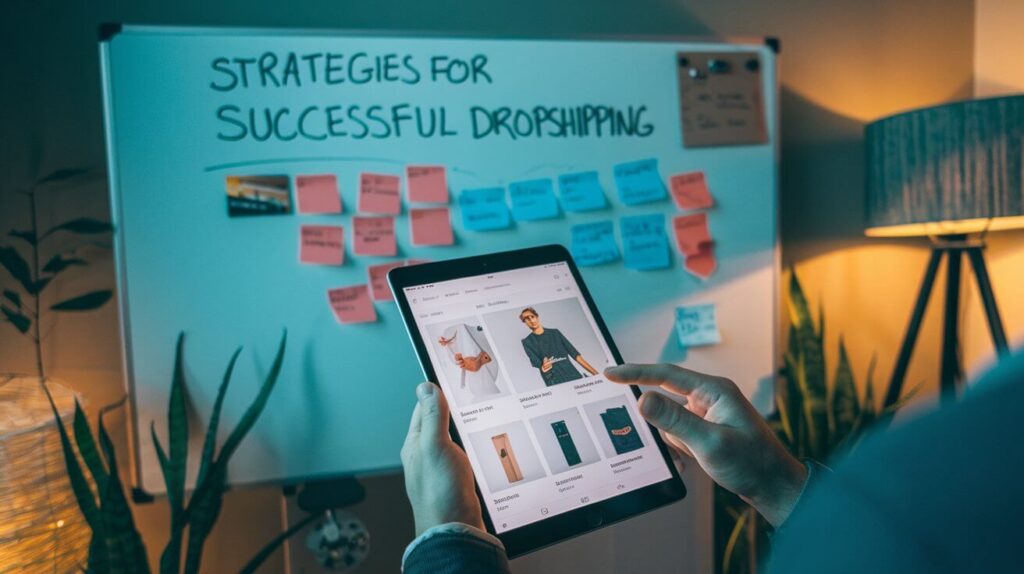
How to find and install dropshipping apps in the Shopify App Store?
Find and install apps? It’s very simple. Go to the control panel, look for “Apps”. Click on “Visit Shopify App Store”. In the search, type “dropshipping” or the name of a specific app. Selected? Click “Add app”, then “Install app”. Follow the instructions – and voilà!
Official and third-party plugins for Shopify
Official plugins from Shopify are usually free. Shopify Email, Shopify Chat – great examples. Reliable as a Swiss watch.
Third-party plugins are a different story. Oberlo, DSers, Spocket – true stars of dropshipping. They can be paid, but often worth every cent.
Don’t be afraid to experiment with apps. But remember: each new app is an additional load on your store. Choose wisely.
And also. Don’t forget the updates. Developers don’t release them just like that. New features, security improvements – all of this is important.
Registration on Shopify
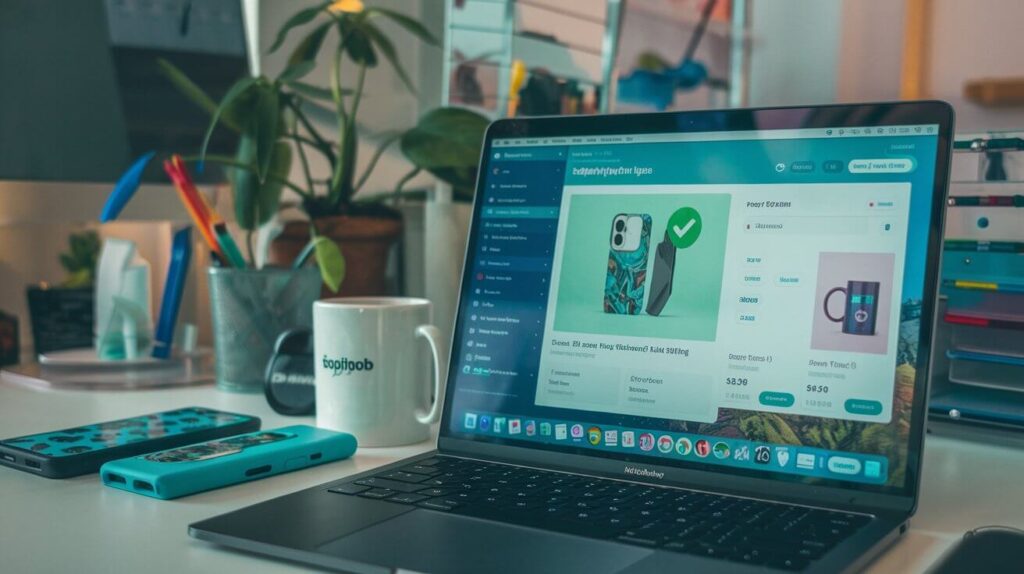
How to register on Shopify to create a dropshipping store
Getting started is always the hardest part. But with Shopify, it’s easier than it seems.
Registration? Child’s play. Go to the Shopify website, click “Start free trial”. Enter your email, password, store name. Fill out the form—short and to the point. Personal details—name, surname, address. Confirm your email. And here it is—your dashboard. Welcome to the world of e-commerce—your online store awaits!
How to choose a tariff plan for dropshipping on Shopify
Now about the plans. Here, you need to think. Assess your ambitions, projected turnover. For beginners – Basic Shopify, $29 a month. Growing? Shopify at $79 is perfect. Lower fees, more features.
And here, Advanced Shopify at $299 – this is already the top tier. For those aiming to be market leaders.
Compare features, think about your prospects. But don’t be afraid to start small. You can always upgrade later.
Remember: the right plan choice is a balance between costs and capabilities. Don’t overpay, but also don’t skimp on growth.
Choosing Partners for Dropshipping
Choosing a supplier in dropshipping is like roulette. Miss your shot – and goodbye, business. In e-commerce, you absolutely need a supplier.

How to choose suppliers for dropshipping
Here’s your checklist “Supplier Search”:
- Reputation? Yes, it’s damn important. Look for those who have been in the market for a while. Check reviews, dig deeper.
- The quality of the product should be top-notch. The customer will receive lousy goods – you’ll have to sort it out later. And the store will be left without products.
- Delivery speed is sacred. Nowadays, people don’t like to wait. Slow delivery means losing customers. Online business today is a rocket.
- Returns? Transparency is essential here. Otherwise, you’ll be sued, you won’t even have time to blink. Accounts will be closed.
- The relevance of the catalog is no joke. Outdated junk is useless to anyone.
- Photos and descriptions of products should be just right. So that the saliva flows, understand?
- Support on the supplier’s website is your lifeline. One email isn’t enough, trust me. In an e-commerce company in 2024, there should be at least a business chat.
- Branding packaging? Small thing, but nice. The customer will appreciate it. If your business model provides for this, of course.
- Transparency in work is the foundation of everything. Without trust, there’s nowhere in our business. Suspect something? No support for several days? The product has been shipped to the buyer, but there’s no tracking? Run away from there.
- Integration with your platform? Absolutely. Otherwise, you’ll be sick of doing everything manually.
Platforms and tools for product and supplier search
Now about platforms. Oberlo, DSers – a good option to start with AliExpress. Spocket – if you want to work with the USA and Europe. Dropified automates processes and saves time.
SaleHoo, CJDropshipping – offer a larger selection. Modalyst for those who like to show off brands. Printful and Printify – if you want to play with designs.
AliDropship, Doba – also options, check them out.
Most importantly, don’t skimp on time when choosing. It will pay off handsomely later. And don’t be afraid to try new things. The market doesn’t stand still, and neither should you.
Shopify tariffs and online store costs
How much does it cost to run a dropshipping business on Shopify
Let’s start with the basics.
- Shopify costs from $29 to $299 per month. Choose wisely – don’t overpay, but don’t skimp on important things either.
- Domain name? $14-20 a year. It’s a small amount, but you can’t do without it.
- Apps for dropshipping – from free to $50+ monthly. Oberlo, DSers – good options.
Overall, at the start, you’ll need $50-100 per month. Not that much, right?
But this is just the tip of the iceberg. Be prepared for additional expenses.
What additional costs may arise
- Payment systems will take 2-3% + $0.30 from each transaction. A little, but it adds up.
- Advertising is a separate story. From $100 to the sky. Facebook, Google – greedy beasts.
- Fulfillment? 10-20% of the product cost. Not cheap, but often worth it.
- Design and branding – from $100 to $1000+. One-time, but it’s important not to make a mistake.
- Email marketing, analytics – another $10-100 per month. Small, but necessary.
- And don’t forget about returns – about 5-10% of revenue. Sad, but inevitable.
Together – 25-30% of the product’s selling price.
Remember: business requires investments. But smart savings never hurt. Weigh every decision.
And finally: don’t be afraid to invest in growth. Sometimes you have to spend to earn.
Shopify Business Model: Niche and Product Selection
Which products are best to sell through dropshipping on Shopify
Niche selection is the foundation of e-commerce. Let’s see what you can upload to your online store:
- Clothing and accessories – timeless classics. T-shirts, dresses, bags – people always want to look stylish.
- Home goods? A goldmine. From bedding to lighting fixtures – everything is in high demand.
- Electronics and gadgets – the key is to stay ahead of trends. Cases, chargers – small items, but they bring profit.
- Beauty and health – another eternal trend. Cosmetics, skincare products – women (and men) don’t economize on this.
- Hobbies and creativity – a niche for thoughtful people. Craft kits, paints – understanding your audience is important here.
- Pet products – a great choice. People don’t skimp on their pets. According to statistics, sales in this niche are only growing.
- Sporting goods – a relevant topic. A healthy lifestyle is in fashion.
- Children’s products – quality is key here. Parents are very protective of their children.
How to conduct market analysis and choose profitable products
Now about market analysis. Once you’ve defined your store’s niche, selecting products is no longer so difficult — we know what we’re looking for.
- Google Trends — your friend and advisor.
- Don’t ignore social networks either. Buyers always want to share (here’s your content for advertising).
- Study your competitors thoroughly. The cost of their mistakes is your savings and opportunities.
- Tools like Oberlo are indispensable. They save a lot of time.
- Demand and seasonality are key factors. Don’t miss the timing.
- Customer reviews are a source of information. Read between the lines.
Profit calculation is a delicate matter. Consider all nuances: from procurement to delivery.
Test sales are a must-have for any business. It’s better to lose a little than to risk a lot.
And remember: sales analysis is not a one-time act but a continuous process. Be flexible, adapt to the market.
Let’s start with the obvious — image quality and product descriptions. Nothing else will do. The customer must clearly understand what they are buying.
Analysis and improvement of the store
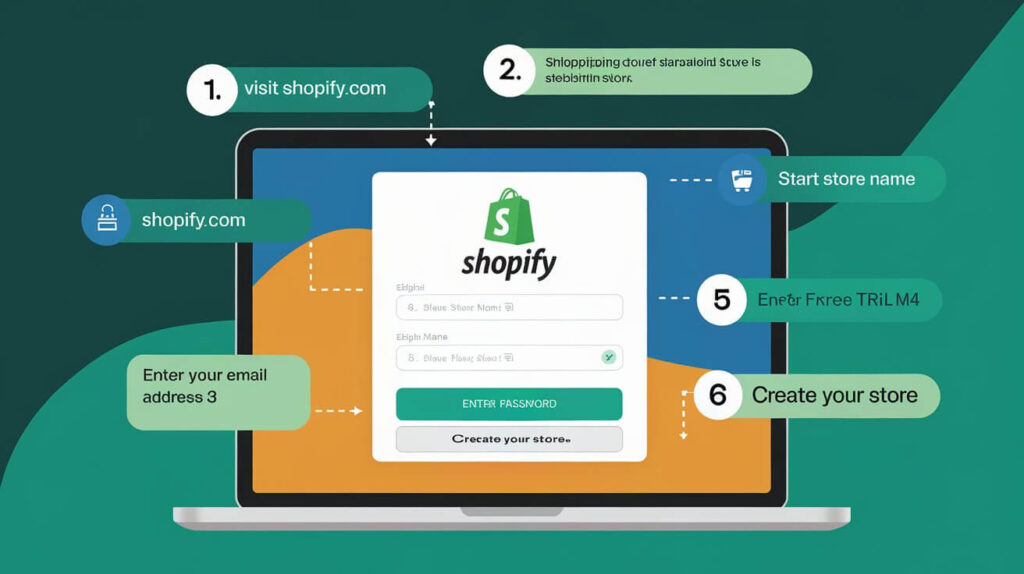
How to optimize conversions and sales in a dropshipping store
Here are some important tips for your store.
The checkout process. Make it as simple as possible. Unnecessary steps – lost customers. Do not distract the buyer during the sale if they are already ready to purchase your product.
Personalization. Implement smart product recommendations. The customer should feel that you understand them. In 2024, feelings prevail, and that’s good for your business.
Retargeting – a powerful tool. Rebring visitors back, remind them of your store. Especially after launching new products.
Reviews and ratings. Social proof works flawlessly. People trust people. It is customary to gift a present or a coupon to customers who leave reviews.
Free shipping on a certain order amount. A great incentive to increase the average check. Even better when the product prices always include shipping.
Pop-up windows with promotions. Use them wisely, do not annoy customers.
Mobile optimization. In 2024, this is no longer an option but a necessity.
Live chat for support. Fast responses – satisfied customers. It’s hard to imagine a Shopify store without chat today. There are free options in app stores.
A/B testing. Constantly improve your site based on data.
Performance control tools for drop shipping
Over a quarter of a century in business, I have tried many analytical tools. I’ll share the most effective ones.
- Google Analytics – indispensable. Traffic, user behavior – all at your fingertips. The true “Beginner’s Guide”.
- Shopify Analytics – if you’re on Shopify, of course. Built-in analytics – it’s convenient.
- Hotjar – I love their heatmaps. You can immediately see where visitors get stuck.
- SEMrush – for SEO and competitor analysis. Keeps you on your toes. In my opinion, better than Ahrefs.
- Facebook Pixel – advertising on Facebook without it is like money down the drain.
- Kissmetrics – a great tool for sales funnel analysis. Shows where we lose customers.
- Mixpanel – good for tracking interactions. Helps understand what really works.
- Crazy Egg – yet another heatmap tool. Never too much.
- Optimizely – A/B tests are everything. Without them, it’s like being unarmed.
- Segment – a handy tool for centralizing data, very popular among sellers. Saves a lot of time.
It’s important to remember – tools are good, but the main thing is to interpret the data correctly. Don’t drown in numbers. Look for insights that can be practically applied. And don’t forget – behind every number is a real person. Good luck with your analytics!
And wishing you successful sales!
Key takeaway
Dropshipping on Shopify does not work because of “magic without stock,” but due to the right niche, a reliable supplier, clear shipping, and a systematic store launch.
Frequently Asked Questions
Can you start dropshipping with almost no investment?
Can you start dropshipping with almost no investment?
The author directly states this as one of the advantages of the model: you can start with minimal expenses since you don’t need to rent a warehouse or purchase a large batch of goods.
What are the main disadvantages of dropshipping?
What are the main disadvantages of dropshipping?
The article lists low profit margins, poor quality control, high competition, and return difficulties as some of the downsides, since the seller does not physically hold the product themselves.
Where to start when launching a dropshipping store on Shopify?
Where to start when launching a dropshipping store on Shopify?
The material recommends starting with creating an account, store name, setting up payments and delivery, choosing a design, connecting dropshipping apps, importing products, and SEO preparation.
How to choose a niche for dropshipping?
How to choose a niche for dropshipping?
The article recommends assessing demand, competition, and profitability, as well as using marketplaces, Google Trends, SEMrush, and social media to find trends and gaps in the market.
What should you avoid doing in Shopify dropshipping?
What should you avoid doing in Shopify dropshipping?
The author directly warns against arbitraging products from eBay and Amazon on Shopify, searching for suppliers randomly on Google, selling without a found supplier, and chaotic supplier changes during sales.
What to do next
If you are planning to launch dropshipping on Shopify, the next step is to verify the niche, choose an app, test the supplier, set up payments, and prepare your store for real traffic.
Contact the Western Bid team if you need help with Shopify, payment integration, store launch, or international sales.
