Double taxation when shipping to EU countries occurs when customs levy taxes a second time, because the documents show an amount that does not match the actual value of the goods and information about VAT already paid.
When shipping parcels via UPS Ground and UPS Express services, their customs clearance for EU countries occurs in Poland.
- With VAT paid and the IOSS number provided, the brokerage service fee is $4 (Ground) or $2 (Express) per parcel. This amount is charged in addition to the shipping cost at checkout.
- For UPS Express shipments, if VAT is not paid, the recipient pays this tax upon receipt in accordance with the destination country’s VAT rates.
In all cases, when processing UPS to the EU, you must upload an invoice or order copy in .pdf, .png or .jpg format not larger than 5 MB, where the name and address of the recipient, the value of the goods, and VAT information (if paid) are specified.
Remember that you are responsible for the accuracy of the information provided; mistakes will lead to delays, fines, and additional costs.
To avoid double taxation, note that the value of the goods (the full value, or the discounted value) must match the order on the marketplace (Etsy, eBay and others) and in the documents when processing the shipment.
If you are processing a shipment from a transaction that has entered the Western Bid account, this amount for the goods will not include PayPal and Western Bid fees. Therefore it will differ from the amount on the marketplace order. To avoid additional questions at customs and double taxation, you should adjust the value of the goods when processing the shipment to correspond to the value of the goods on the order.
For this, when creating a shipment to EU countries, specify the current value of the goods, the amount paid to you by the buyer for the goods.
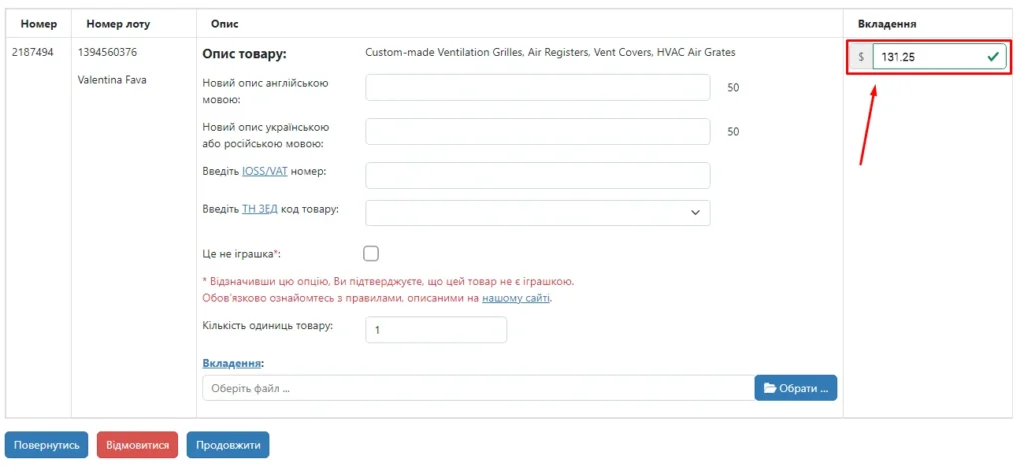
Let's take the price you need to specify as an example.
As we can see, the price of the item on Etsy is 175$. The buyer was given a discount of 43.75$. So the price of the item paid by the buyer was 175$ – 43.75$ = 131.25$. It is this price that should be listed on the invoice when creating the shipment. This price can be easily specified by copying the transaction into the External item or when creating the parcel by entering the correct amount of the attachment in the corresponding field. The Etsy order also lists the shipping cost (16.00$) and VAT (32.40$). Therefore the total amount the buyer paid became 179.65$.
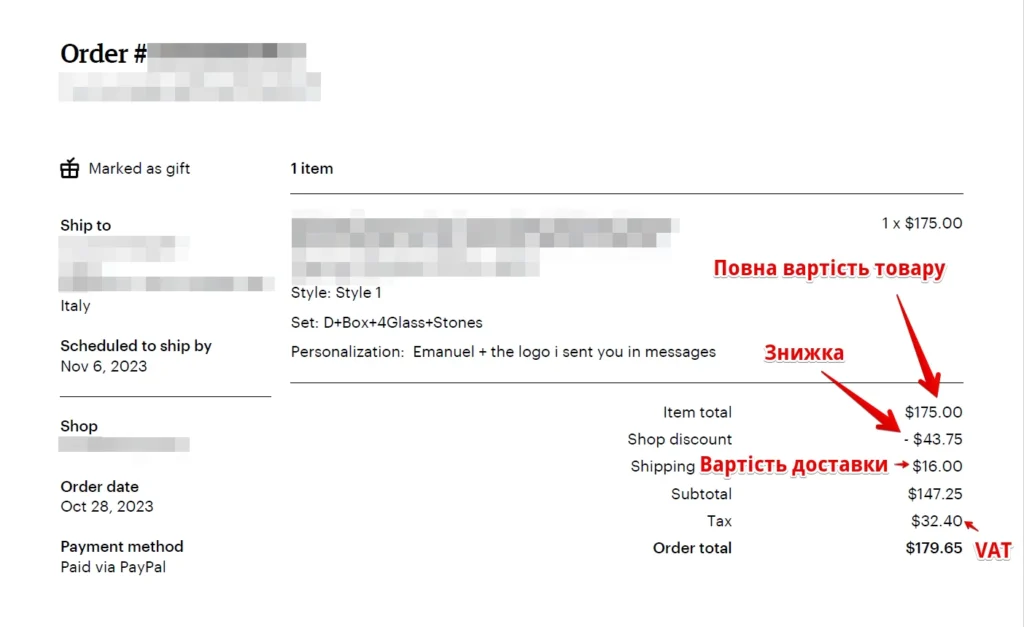
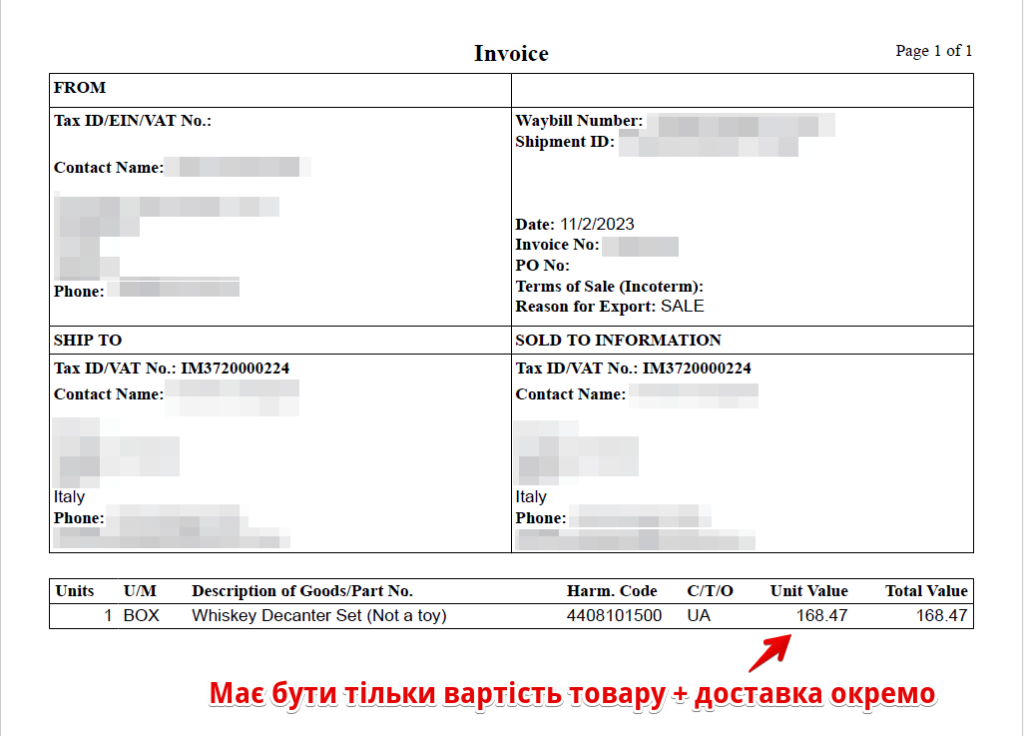
In the Western Bid account, funds arrive immediately with PayPal and Western Bid fees deducted. That is, in the account, the amount of 168.47$ was displayed. As we can see, it differs from the amount stated in the Etsy order, and it is also larger than 150 euros.
And if the amount is more than 150 euros, marketplaces do not charge tax. This tax plus customs duties is paid by the recipient. Therefore, customs charge them during the clearance of the goods. So at customs, when they see an invoice for such an amount, they again start to charge duty and tax.
To avoid double taxation and correctly relay information to customs about the value of the goods, delivery, and paid duties, make sure that all documents indicate the correct value of the goods.
Example of an incorrectly created shipment where the value of the goods is stated together with the delivery cost. The correct value should be the value of the goods $131.25$, the value of the goods excluding delivery.
Checklist to avoid double taxation
- Verify that you have an invoice or a copy of the order from the marketplace showing correct amounts for the goods, shipping and VAT.
- When processing shipments to the EU manually, specify the value of the goods that matches the amount paid by the buyer for the goods (taking into account any discount, excluding shipping).
- Do not include in the ‘Value of goods’ field the cost of shipping and payment system fees or Western Bid.
- Be sure to upload the invoice/copy of the order in .pdf, .png or .jpg format up to 5 MB, indicating VAT if it has already been paid.
- For parcels with VAT and IOSS, ensure that the IOSS number is correctly indicated when processing the shipment.
